Another Point of Singularity has been around on Blogspot.com since December of 2004. I am, today, shutting this blog off. I am NOT going away, just transitioning to WORDPRESS.COM.
I am liking Wordpress more and more these days. For lots of reasons, most of them administrative.
Please take a moment to adjust your bookmarks accordingly. For those of you "following" you can do essentially the same thing in Wordpress.com by "subscribing".
The new blog is THIRD POINT OF SINGULARITY, and is located here:
1. Before this incarnation of a blog, I ran A POINT OF SINGULARITY, on Xanga.com, from 6/03 to 12/04. At the time, Xanga was pretty limited in a lot of ways, and I did not like their posting interface. I understand Xanga has made great strides since then.
2. I have run ANOTHER POINT OF SINGULARITY since December of 2004 on blogger.com, and generally, I'm happy with blogger. Now that the company is owned by Google they are making great strides to integrate their blogging product with other Google apps, and that's only a good thing. However, there are elements of control that I desire that are simply not here. I've been shopping around for a new technology to implement, possibly even (gack!) a paid domain with my own content management application, like Joomla.
3. In the end, I think there's a nice reasonable compromise out there, and it is (yay!) still free. That's Wordpress blogging application, hosted on Wordpress.com. I still may host a Wordpress blog on a paid domain eventually, because Wordpress.com only allows a certain level of functionality and and only their own templates. However, it is a very nice comprehensive blogging service even if I'm not hosting it myself.. Wordpress is more complex than blogger, and I'd like to get used to it for a while before committing myself to PHP and MYSQL. I think it's the right choice.. there are many nifty plugins that support expanded social media activity, like Podcasting and other feeds. That's something I've been nerving myself up to attempt at some point, and it would be nice to have something in place that can handle it.
So, at some point, after I finish importing the archive from blogger.com to Wordpress.com, This blog is going to get turned off. It will still be here, but it won't be updated any more. You will have to move over to http://mrnizz.wordpress.com for THE THIRD POINT OF SINGULARITY.
Fortunately I've been working on transitioning the archive of THIS blog over to wordpress. The posts came over, and most of the tags (as categories) but many are uncategorized.. from the two years that blogger didn't use the tagging system.. GAHHH!
So, this theme has been up for about a year now and for the most part I enjoy it, but it has certain limitations. I've been monkeying around with Wordpress lately and I enjoy the level of control this service gives you, especially with podcasting, which is something I'm working on jumping into. If anyone out there is reading this, I'd be interested in what you had to say.
Ditch the Blogger theme? Go with Wordpress?
THIS is an example of what the new site might look like, with all these posts and comments captured over to it. Comments welcome.
I attended a quiet little Memorial Day service run by the American Legion post of Woodstock, Virginia. The ceremony was quiet, small and very local. There was an invocation, then a prayer for the Dead. A small honor guard saluted as the National Anthem was played, then we said the Pledge of Allegiance. Speeches were given, a local girl who had won a civics essay wrote about the value she placed on the sacrifice of the men and women who put themselves in the way of danger to protect freedom.
Afterward, there was a quiet little lunch of baked chicken and potato salad and coleslaw, which the folks at the Legion called "serving supper". The facility is humble, a largish hall with pictures of Robert Lee and Stonewall Jackson at one end. I grinned at that. Pictures of past presidents and ladies auxiliary presidents line the wall, going back to the sixties. So old fashioned, yet so poignant, this small town who had provided its share of its young men and women to die on foreign fields through the long roll of history. I found myself deeply moved by the whole thing. Living near DC, you see your share of politically inspired hoopla around the holidays. It's all rather solemn but in the end this tiny little town, remembering the fallen, meant so much more to me.
There was a day when I used to attend Science Fiction conventions quite regularly. In my 20s, I was a regular attendee of Evecon, DISCLAVE and occasionally Balticon. Life can throw some changes your way, and mine has been no exception. After getting a suit job and settling down a bit, I had less opportunities to attend them and gradually dropped SF conventions from life in favor of miniature gaming cons like HISTORICON, COLD WARS, and ORIGINS. I love reading and I love science fiction, but I am not a classic fan boy. Geeky, too be sure, but not a fanboy-- I just like a good book or movie. Still, I miss the old days, so when the opportunity arose to visit BALTICON for the first time in years over the weekend, I took it.
Balticon takes place in the Fort Hunt Marriott hotel, which is where HMGS and the BGA have run cons, and I am familiar with the location. To call the locale "Baltimore" stretches the geographic definition a bit, being west of Towson, but the neighborhood is certainly a lot more affordable than downtown.
Con Suites are still in vogue. This one was open 24/7/365, as all good con suites should be.
I'm not crazy about the Fort Hunt Marriott, as a rule. The hotel is expensive (for the location), laid out like a puzzle and quite cramped, dark and claustrophobic. The flip side of the location is parking is free, there are some hotels nearby that are reasonable (unlike in the Inner Harbor, for instance), and the local cuisine is... well.. robust and cheap.
I could only make it for Sunday, but I got up pretty early and participated in a lot of programming until I left at 10:30 PM.. so I got my 36 dollars worth and was well satisfied.
Steampunk was a prominent theme at the convention art show.
After a quick walkabout to get my bearings and visit the dealer's room (such as it was-- the HMGS Exhibitor's hall could have swallowed three of these), I attended the first item on the agenda, which was "LIVE! Stranger Things: Singularity" in the Grand Ballroom. This was a live event hosted by a talented and engaging young chap named Earl Newton. Mr. Newton is a film director and video podcast producer of the show STRANGER THINGS, a web-based video show that is a mix of science fiction, horror, and science fantasy. I like indie films and mixed media content, so I sat in on this one. The format was interesting.. a little too bombastic when a feller named Matt Wallace took the stage and tried to to turn it into a Generation Z pep rally-- you know the drill. "What? I can't HERE youuuuuuu?" and "How about a big hand for all of you...", that sort of thing. Still, I was fascinated with his interview with J.C. Hutchins about Hutchins forthcoming novel, PERSONAL EFFECTS: DARK ART. Mr. Hutchins is an early adoptor of the freebie podcast novel method of getting your name out there (A' la Scott Siglar), and has written three (the Seventh Son trilogy).
Mr. Wallace Interviews Mr. Hutchins
His new book will be published by St. Martins Press and from what Mr. Hutchins described, it will be something to see-- full of extra media bits-- business cards, ticket stubs, websites, etc., all designed to keep you tied into the central narrative and take the story into a direction outside of what is printed on the page. I'm intrigued. Mr. Newton, with the help of Mr. Hutchins, produced a short film whose name I plumb forgot, about digital voyeurism.. this was very well done and well received. I also caught "The Shed" about a family dealing with a zombie outbreak. Fantastic work.
I wanted to catch Scott Siglar's autograph session, but being the hoity toity type that he is, he was busy plotting ultimate world domination and was late, so I ended up giving blood at the Heinlein Society Blood Drive and totally missed his slot. Side Note: Can you think of a better, safer group of blood donors than science fiction fans? I did see Siglar a little later, but I missed my chance.
I spent a brief time in the Dealer's room, being shamlessly huckstered too. I was particularly taken with the works and sales approach of Mr. C.J. Henderson, who was cheerful and engaging and absolutely without shame about pimping his work. I ended up buying TO BATTLE BEYOND from him directly, and look forward to reading it. Mr. Henderson seems to be inhabiting a nice pulpy niche in science fiction-- somewhere between Randall Garrett and P.J. Farmer.
I stopped in a Costuming panel discussion, because the subject was "Steampunk: the Next Big Thing" (which I thought was a silly title-- Steampunk never really went OUT of style, so how could it be the next big thing?).
They had some neat toys!
I'm not even remotely a costuming type of person, so I just looked at a few props and left to sit in on a presentation called THE TOXICOLOGY OF MUSTARD GAS, by Doctor Henry Meier. The presentation was simply fascinating (and not a little bit gross in parts).
From there, I went to a panel discussion called HOW TO TEACH AN OLD BLOG NEW TRICKS, by Angela Render and Mur Lafferty. Miss Render, in particular, is very market savvy about web design and marketing, and Miss Lafferty was in the forefront of the social media marketing of novels.
Mur Lafferty
Angela Rader, Web marketing whiz.
The discussion was focused on "blog rejuvenation strategies" and I found it interesting and useful. I may even follow some of that advice for this blog-- not that it's a commercial entity or anything.
After a jaunt out to discover my favorite barbecue joint down the street isn't open on Sundays (curses!), I came back for a short jaunt to the game room (playing the Traveler version of FULL THRUST), then to attend PODCASTING 102, with a panel consisting of Earl Newton (remember him from earlier?) Dan Tabor, Patrick Maclean, MAinPA, and Paulette Jaxton. Since, at some point, I intend to start a podcast of my own, I wanted to drop in on this panel discussion to pick up useful information. It was a very helpful little group, but sadly, far too short.
The Video Room was very hip, but I never spend time there-- I can watch commercial video at home. HOWEVER, this offering, FAUST: EINE DEUTSCHE VOLKSSAGE, made me wish I had the time to spare.
From podcasting, to film festivals.. I ended the evening watching the BALTICON SUNDAY NIGHT FILM FESTIVAL in the ballroom. This was a wonderful (if chilly) event. I recall some of the entrants, but didn't write it all down.
(the Hunt for Gollum floored me. A forty minute short that fills in the small gap just before the events of THE FELLOWSHIP OF THE RING. Shot in a visual style with props, actors, fonts and cinematographic style very evocative of Jackson's work, I'm thinking I'd better download this fast before the New Line lawyers pay the producers a visit with a cease and desist letter. It was genius.
Six Impossible Things was a sweet story about a young girl who builds a robot to cope with the loneliness in her life after her mother passes away.
the last one I can recall was THE ALLIANCE, a potboiling classic Science Fiction oater. What was unique about this one was the distinctive (extremely positive) Muslim viewpoint of the director and writer.
After nearly freezing out of the auditorium, I submitted my ballot and nosed my car out into the traffic for home-a-byes..
In retrospect, I'd have to say I liked Balticon very much, especially the many interesting panel discussions on Social Media and cross media promotions. I will likely not be giving up any miniature gaming convention for a SF convention any time soon, because for me, reading is a personal and private thing. I'm not the type of fellow to put on a costume or wear a lot of buttons or go (shudder) filking, so I'm really only at these things for the books. Still, some people I admire were there (Siglar, and Lafferty, and Van Verth, and Hutchins and etc) so I'm glad I was in the same place with them at the same time, even if I'm too shy to be a nudge, even with Siglar. So I'll likely attend a Balticon again, if opportunity arises, but it won't be a driving force in my life. I'm not 20 any more!
On the way back from dropping off Anne and Little G up at the cabin, I took the long way back through Mosby's Confederacy (aka, the Horse Country of Northern Va)-- Middleburg, Upperville, Aldie, etc. Simply gorgeous and sunny, I was in no great hurry to be anywhere. When I'm in no great hurry to be someplace, and in Chantilly, I drop in the Game Parlor, and Saturday was no exception. I was was pleased to run in to my friends Ed, Nigel, Jeffrey and Brett, who were there for Worldwide D&D Game Day. I have only a nodding acquaintance with the new 4th Edition of Dungeon and Dragons, which is a game very much removed from the days of my youth. I figured what the heck and sat in on an adventure after well all went out for Peruvian chicken and Yucca.
Say what you like about Wizards of the Coast (and why not? I often do), they have the logistics on this event nailed. WotC recruited a small army of volunteer GMs to run a series of canned adventures, provided them with the maps, the figures and the modules to run the event with. These were short adventures, designed to be run through end to end in four hours or less. We did our in 3 hours and change.
The Blurb:
Journey Through the Silver Caves – A kobold wyrm priest has stolen an ancient book of prophecy from the people of Albura, a fortress on the borderlands. The kobold has a dark plan for the book – and only you can stop him in time! An adventure for 5 pregenerated 5th-level characters.
First thing I noticed: there's a ton more player character races in this version of D&D. We had an Eldarin wizard, a Dragonborn sneaky guy, a Tiefling warlord, and a Dwarf paladin as well as me, a giant stony-skinned grey guy named Uthal, who was a "Goliath Barbarian".
The second thing I noticed is the game is much more skirmish-like than the old days. Most adventures are focused on a group going to a nasty place to fight it out with bad guys. The nasty guys are a lot nastier than they used to be. To an old guy like me who was used to wading through (literally) mountains of make believe low level critters back in his heyday, to face Orcs and Kobolds that not only put up a heck of a fight, but can stand and deliver for several turns, inflicting deadly force every time, well, that's a surprise.
Characters have more race and class specialty actions than in the old days. Skills are critical for combat now, and all classes have specific actions they can take to modify a combat.
The new D&D is faster, more complex with a lot of "Bottom" that we used to have to create ourselves. I like it!
Released: Historical Miniatures Gaming Society East Announces Legion of Honor, Scruby Award Winners
Bel Air, MD (May 11, 2009) -- The Historical Miniatures Gaming Society East (www.HMGS.org) will present the Society’s lifetime achievement award -- the Jack Scruby Award - to Todd Fisher of Chicago, IL at the 25th annual HISTORICON ™ 2009 conference to be held July 16 – 19, 2009 at the Lancaster Host Resort and Conference Center in Lancaster, PA. The Jack Scruby Award is presented bi-annually by the Historical Miniatures Gaming Society East (HMGS) for distinguished service to the hobby of historical miniatures gaming. HMGS is a non-profit educational organization that promotes the study of military history through historical miniatures gaming, seminars, grants, and conventions.
The Scruby Award is named after the late Jack Scruby, one of the first to make a critical contribution to the growth and promotion of the hobby and industry of historical miniatures gaming in the U.S. The award recognizes individuals who exhibit the same selfless service and incomparable contributions to the hobby as exemplified by Jack Scruby.
Todd Fisher has contributed to many different fields of historical miniatures gaming. An avid wargamer and dedicated Napoleonic scholar, Todd has organized and assisted in organizing a number of game conventions, the most notable is Little Wars, sponsored by the HMGS Midwest chapter, which Todd was also instrumental in organizing. Perhaps Todd’s most famous achievement was the Emperor’s Headquarters (EHQ) that he started in 1990, a wargaming super-shop that gamers drove hundreds of miles to visit, and which undoubtedly inspired many of the successful historical shops in the country today. Todd also formed the Emperor’s Press, which published not only wargaming rules, but also many serious scholarly works by respected historians, including Christopher Duffy. Todd was editor and publisher of Napoleon Magazine and has served as a retailer, publisher, and manufacturer, producing a number of historical figure lines under license. He has also been involved in the artistic end of the hobby, the art of game design. Todd has been closely associated with the various editions of Empire, and was central to the development of the new Revolution and Empire rules, in addition to designing the popular medieval rule set Revenge.
Todd is the Executive Director of the Napoleonic Historical Society, and in that capacity, he has led tours of the Napoleonic Sights of Europe for over thirty years (he was one of six original inductees in the International Napoleonic Society.) He has authored several books on the Napoleonic period, including The Napoleonic Wars, which is used as the textbook for many graduate courses, written articles that have appeared in international journals, and was the chief historical advisor on the Peabody award-winning “Napoleon” for Public Broadcast System (PBS).
“Todd’s incredible accomplishments in the field of historical miniatures gaming -- from conventions, education and retailing to publishing and game design -- make him an outstanding recipient of the Jack Scruby Award,” said Pete Panzeri, president of HMGS.
HMGS Legion of Honor Awards
Elected to the 2009 HMGS Legion of Honor are Don Perrin and Philip Viverito whom will be inducted during the Scruby Awards Dinner, Friday night at HISTORICON ™ 2009. The Legion of Honor inducts individuals for their significant personal accomplishment in one or more fields of historical miniature gaming.
Don Perrin of Williams Bay, Wisconsin is publisher of Historical Miniature Gamer Magazine and president of True North Miniatures. He was also the publisher and editor for James Manto's Men-at-Arms medieval wargame. Don served with the Canadian Army for 10 years, retiring as a Captain in the Corps of Electrical and Mechanical Engineers. Currently, Don works with the Pearson Peacekeeping Centre of Canada to train Corps Headquarters in NATO, the European Union and the African Union for peacekeeping operations. He has published eight novels and has authored or edited a host of card games, miniatures games and role-playing games, including the Dragonlance d20 Campaign Setting, the Star Trek Original Series Collectible Card Game, Uncle Duke's Napoleonette Rules for 15mm Napoleonics and the Sovereign Stone Role Playing Game. Don has also served as president of the adventure game industry's trade organization GAMA, and has consulted for games and toys with Hasbro, Mattel, Origin Systems and Scenario.
Currently, Don devotes his time to printing other peoples fine miniatures games (such as Test of Battle Games' Command Decision: Test of Battle, LMW's G.A.S.L.I.G.H.T and Holy Hack, Sam Mustafa’s Might & Reason and OGDW's General Quarters), through his company Quality Print-On-Demand. He helped organize many conventions, including HISTORICON, Little Wars, REDCON, and RockCon, is publisher of the award winning Historical Miniature Gamer magazine, North America's only historical miniatures magazine, and continues to promote and play historical miniature games.
Philip Viverito of Tonawanda, New York is a prolific writer, historian, game-rules author, game-master, figure painter, master terrain maker, event organizer, and HMGS supporter. He began creating model buildings and relief maps focusing on various historical periods from Classical times to modern times model in junior high school and was so successful that he was invited to lecture on historical topics to other classes. After graduating Niagara County Community College and then Niagara University with a BA in history, he began building larger, award winning dioramic presentations for gaming conventions. He was contracted to do an architectural display for Amherst Historical Museum, Amherst, New York. Later he designed and created a series of seven miniature buildings depicting the development of The French Castle for The Old Fort Niagara Association, Youngstown, New York. In addition, he assisted in cataloging photographs for the Association's librarian. This led to other photographic assignments for the Fort. He was also responsible for the care and preservation of the Canadian Power Company's photographic archives and collections, eventually creating a photographic history of the company that was donated to the Canadian Government collections. Other commercial endeavors include photographic work for the Carnegie Museum of Natural History, the Smithsonian and the Niagara Falls Public Library Local History Department. Phil and other authors have their game systems, scenario books and The Classical Hack Newsletter published through LMW Works, which he co-founded.
Phil has traveled extensively through out the U.S. and Canada putting on demonstrations and seminars using his models as a backdrop, bringing history to life in miniature. Phil is noted for his speaking engagements as a former Smithsonian Instructor, having participated in The Legacy of Hannibal Program at the Tunisian Embassy in Washington, D.C. His other speaking engagements include the Origins War College, Buffalo School System D’Vouville Campus and The Biblical Archeological Society (Buffalo).
“We congratulate Don and Phil on their accomplishments and welcome them into the Legion of Honor,” said Pete Panzeri, president of HMGS.
HISTORICON is the largest historical miniatures gaming convention in the United States. Each year, thousands of avid gamers descend on what the New York Times has described as the "mother of all war gaming conventions." The event features thousands of attendees (adults and children), hundreds and hundreds of games, the world's biggest war game hobby shop, painting events, and a special awards celebration. Other HMGS events include the annual “Fall In” convention to be held Nov. 6 – 9, 2009 in Gettysburg, PA, “Cold Wars”, to be held March 11 – 14, 2010 in Lancaster, PA, and “Historicon 2010” to be held in Baltimore, MD next July.
I used ProFlowers.com last year, on a coworker's recommendation (to take advantage of an online coupon that was making the rounds, to be honest, 15% off). I ordered a nice arrangement for my own mother and one for my wife, gave them the different addresses, had them repeat it back to me. Paid for it, printed out the PDF receipt and tucked it away-- then the hilarious hijinks ensued. Both arrangements were sent to my mom, which isn't all that bad a thing, but it's not very classy to have a flower arrangement for your wife go elsewhere. Ah well, I thought, they can't do the same thing twice if I use two different vendors, can they? This year I ordered another nice arrangement from ProFlowers for Audrey. Fedex dutifully emailed me that they had arrived (in my garage-- even though we were home). I rushed out and retrieved the box, only to open it up and discover... stems. Yes, that's right, ProFlowers delivered a box of chopped off stems to my house for Mother's Day. I was fit to be tied-- and my language was salty, bordering on coarse, when I called up the ProFlowers customer representative. To their credit, they promptly refunded me for my order both times-- but I'm not getting fooled a third time. Sayanora, ProFlowers!!
I've been dabbling in 54mm Gladiators for a long time, almost two years. I really like the scale of 54mm-- it's easy to paint and easy to play with. For as long as I've been involved in this scale, I've enjoyed the spectacle of big figures, but there's never really been a decent solution for a coliseum.
Sure, I could have gone with the Ben Hur Coliseum playset. You can still get this in recast plastic-- but it doesn't look like a Coliseum to me, and it costs an arm and a leg to find one in any decent shape.
The figures are kind of playmobil like, but I gave them to Gar (with the chariot), keeping the shields and weapons for gladiator games as missing weapon tokens. The coliseum itself is made of a semi-soft plastic (not rigid), with lots of fine detailing in the statuary and tiling and mosaics. The scale is just perfect for 54mm. At this moment, I have primed it with Kryolan Fusion plastic paint, and I'm tempted to leave it be, or give it another coat-- the kryolan gives it a sort of marble finish. I'll have to paint the door and fixture details, of course, to give it some contrasts. I am pleased with the investment, which was fairly minimal compared to picking up an entire Ben Hur playset, and frankly I think this looks better.
Alan Calhamer (pictured above, in younger days), once was a genius graduate of Harvard University, attended law school (dropping out), thought he might end up teaching history, ended up retiring from being a letter carrier for 25 years in La Grande Park, California. Along the way, he had one great achievement. He designed the game Diplomacy. A recent article in Chicago Magazine, "All in the Game" by Edward Mclleland, tells us the rest of the Alan Calhamer's life story. I found the article very poignant, and it concludes with the question: Is a life worth one great achievement? I'm sure Alan thinks so, somehow.
His childhood friend, Gordon Leavitt, sums it up nicely: "If somebody had written a book that’s still in print 50 years later, that’d be quite an accomplishment. That’s what Allan did. He invented something that’s still being used 50 years later.”
If you like boardgames, especially Diplomacy, read this article. It's a very human story.
I bumped into Jeremy on Facebook. I'm not a stalker or anything; Facebook provides a nice opportunity to get a voyeuristic window into the lives and current projects of writers I like. Those writers have friends that are writers, and maybe Facebook recommends more to you, and so on, and so on.. so on. To be utterly honest, I had some inkling of Jeremy's existence in advance, as a writer that sometimes pops into CEMETARY DANCE magazine, and I have heard his name whispered in association with something called "Bizzaro Fiction", so I croaked "Oh! That guy!" and sent him a friend request. Most writers will friend you on Facebook, that's nothing special.. it's just another way of making word of mouth happen. Jeremy seems like a nice chap, though, and ran a little "Status Update Murder Mystery" where the people on his friends list would grill him for clues and they would eventually figure it out, three minute mystery style. I liked that-- it's fun and accessible. So when he sent out a status update asking "anyone want to review VACATION and SHEEP AND WOLVES (short stories)? There' s a couple of free PDFs in it for you!" I figured, why not?
VACATION grabbed me with the first sentence, and that's a capricious enough way to get a review started in my book. So that's what I'm reading now. I hope to have it done over the weekend; we'll see. I'm trying to kill off ANATHEM for my book club one of these days, so I can't promise I'll get to SHEEP AND WOLVES quickly, but I think I can plow through VACATION quickly enough.
And many more! Great White Fleet, Sink the Bismarck, Midway, etc. There are many history geek tshirts out there, but very few on naval subjects, and even fewer on 19th century and dreadnought era battles and themes.
There are also polo shirts with embroidered naval flags of the time period:
The SEAWARSTORE's Naval Theme and Naval Battle Shirt page is HERE.
Eastern Funker's "Panzerfaust: Iron Fist" blog has a very nice series on a project he completed recently, building roads out of caulk applied to sheet styrene cut into standard miniature wargames road templates.
For the entire series, START HERE. for "Follow the Homemade Caulk Road"
Long term readers may remember the stunt where I used the now deceased Smoking Betty (my pickup) as a jury rigged shield for a nest of Cardinals in the cherry tree in our front yard. The result was a bevy of female cardinals that have gone on to go find some eligible cardinal gentlemen to set up house with. I'm happy to report that their parents, the original Mr. and Mrs. Cardinal, seem to have returned and appear to be antsy to set up a nest somewhere on the grounds of the Casa Nizz.
no, this isn't them, but it sure is pretty
The branch they normally use was snapped by a passing bus last year (validating my decision to park a truck underneath it during nesting season), so we haven't located the new nest yet. I wish Mr. and Mrs. Cardinal every success in 'doin the Cardinal nastay'.. and hope we shall have some smaller piping voices soon.


 Con Suites are still in vogue. This one was open 24/7/365, as all good con suites should be.

 Mr. Wallace Interviews Mr. Hutchins

 Angela Rader, Web marketing whiz.
 The Video Room was very hip, but I never spend time there-- I can watch commercial video at home. HOWEVER, this offering, FAUST: EINE DEUTSCHE VOLKSSAGE, made me wish I had the time to spare.
 On the way back from dropping off Anne and Little G up at the cabin, I took the long way back through Mosby's Confederacy (aka, the Horse Country of Northern Va)-- Middleburg, Upperville, Aldie, etc. Simply gorgeous and sunny, I was in no great hurry to be anywhere. When I'm in no great hurry to be someplace, and in Chantilly, I drop in the Game Parlor, and Saturday was no exception. I was was pleased to run in to my friends Ed, Nigel, Jeffrey and Brett, who were there for Worldwide D&D Game Day. I have only a nodding acquaintance with the new 4th Edition of Dungeon and Dragons, which is a game very much removed from the days of my youth. I figured what the heck and sat in on an adventure after well all went out for Peruvian chicken and Yucca.


 Title unknown, Artist: Eric Joyner
 I used ProFlowers.com last year, on a coworker's recommendation (to take advantage of an online coupon that was making the rounds, to be honest, 15% off). I ordered a nice arrangement for my own mother and one for my wife, gave them the different addresses, had them repeat it back to me. Paid for it, printed out the PDF receipt and tucked it away-- then the hilarious hijinks ensued. Both arrangements were sent to my mom, which isn't all that bad a thing, but it's not very classy to have a flower arrangement for your wife go elsewhere. Ah well, I thought, they can't do the same thing twice if I use two different vendors, can they? This year I ordered another nice arrangement from ProFlowers for Audrey. Fedex dutifully emailed me that they had arrived (in my garage-- even though we were home). I rushed out and retrieved the box, only to open it up and discover... stems. Yes, that's right, ProFlowers delivered a box of chopped off stems to my house for Mother's Day. I was fit to be tied-- and my language was salty, bordering on coarse, when I called up the ProFlowers customer representative. To their credit, they promptly refunded me for my order both times-- but I'm not getting fooled a third time. Sayanora, ProFlowers!!
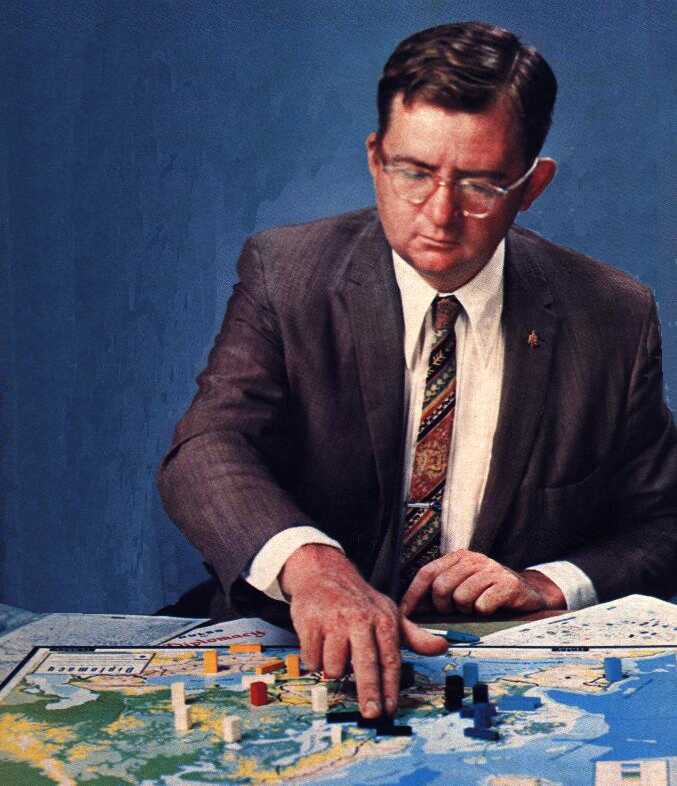 Alan Calhamer (pictured above, in younger days), once was a genius graduate of Harvard University, attended law school (dropping out), thought he might end up teaching history, ended up retiring from being a letter carrier for 25 years in La Grande Park, California. Along the way, he had one great achievement. He designed the game Diplomacy. A recent article in Chicago Magazine, "All in the Game" by Edward Mclleland, tells us the rest of the Alan Calhamer's life story. I found the article very poignant, and it concludes with the question: Is a life worth one great achievement? I'm sure Alan thinks so, somehow.
  Eric Joyner, What We Ought Not, We Do, 2006.

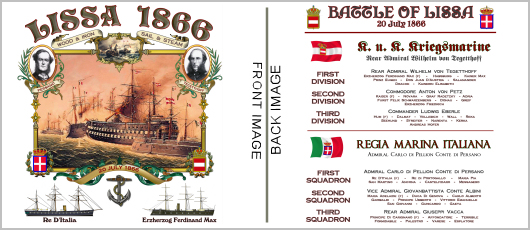
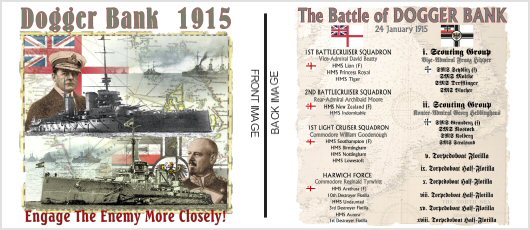




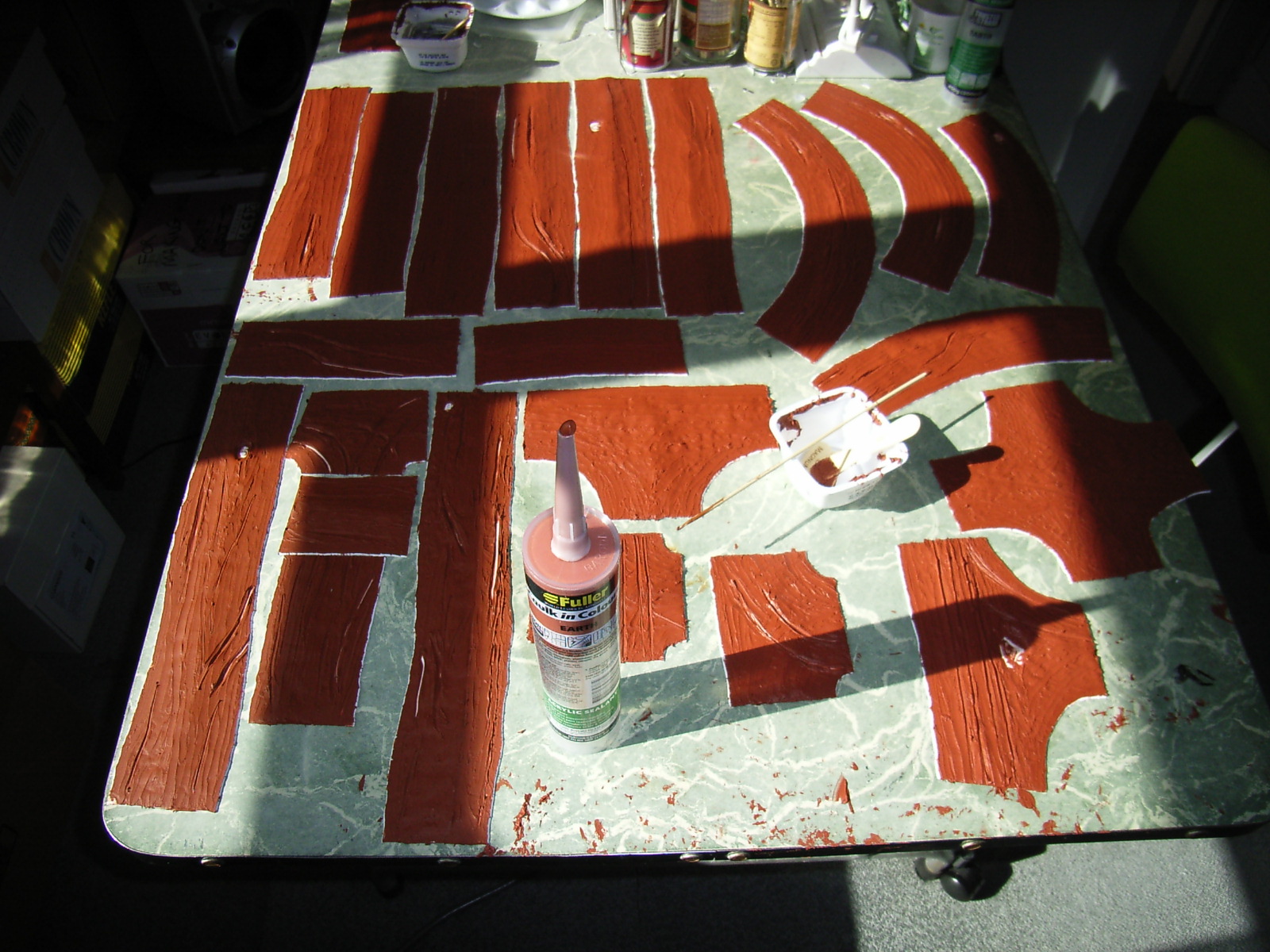 Photo Credit: Eastern Funker's blog
 no, this isn't them, but it sure is pretty


